

New Reviews: History
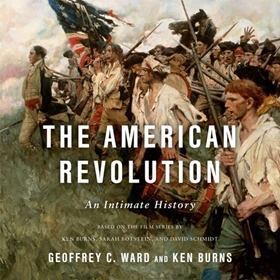
THE AMERICAN REVOLUTION An Intimate History
by Geoffrey C. Ward, Ken Burns | Read by Robert Petkoff, Beth Hicks, Fred Sanders, Ken Burns
Random House Audio | Unabridged
HistoryGeoffrey C. Ward's audiobook version of the current Ken Burns documentary series recounts the history of the Revolution as a story, and Robert Petkoff delivers it as such. He matches its narrative flow with a polished performance that draws the listener compulsively and pleasurably along. Never calling attention to himself, he narrates the text deftly with a subtle but... Read More
THE AMERICAN REVOLUTION AND THE FATE OF THE WORLD
by Richard Bell | Read by Richard Bell
Penguin Audio | Unabridged
HistoryListeners will be struck by author Bell's polished British accent as he narrates this history of America's Revolution. Bell looks at non-patriots, British loyalists, Hessians who fought for the British, and French who fought for the Americans, as well as how the Revolution impacted the outside world--in Jamaica and Gibraltar, and in Britain itself. George Washington is a... Read More
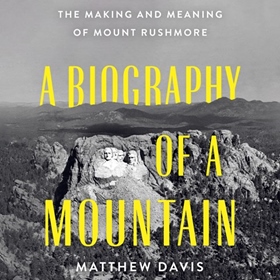
A BIOGRAPHY OF A MOUNTAIN The Making and Meaning of Mount Rushmore
by Matthew Davis | Read by Scott Merriman
Brilliance Audio | Unabridged
HistoryMount Rushmore is an awe-inspiring site, and the story behind it is nearly as monumental. Author Matthew Davis chronicles the history of the project, paying particular attention to its impact on and relationship with the people who lived there for centuries. He adds bits of trivia, such as the fact Thomas Jefferson isn't in his planned location because an overeager worker used... Read More

THE DARK SIDE OF THE EARTH Russia's Short-Lived Victory over Totalitarianism
by Mikhail Zygar | Read by Daniel Henning
Simon & Schuster Audio | Unabridged
HistoryZygar, who was born at the beginning of the last decade of the USSR, is now an expatriate Russian journalist living in the West. In this audiobook he provides great detail on the interpersonal relationships among the various members of the Soviet ruling elite and how what seemed like an opportunity for "democracy" was muffed by all parties concerned. Henning's clear voice is... Read More
THE DREAM FACTORY London's First Playhouse and the Making of William Shakespeare
by Daniel Swift | Read by Matthew Lloyd Davies
Brilliance Audio | Unabridged
HistoryCarpenters and landlords stand alongside playwrights and actors in this lively audiobook history of London's first commercial theaters. The very first, The Theater, opened in 1576, and its history chronicles the birth of British theater. Renaissance scholar Swift works from scraps--leases, lawsuits, lumber prices, apprenticeship figures, plague deaths, and the names of actor... Read More
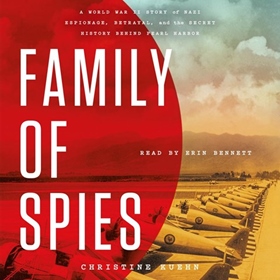
FAMILY OF SPIES A World War II Story of Nazi Espionage, Betrayal, and the Secret History Behind Pearl Harbor
by Christine Kuehn | Read by Erin Bennett
Macmillan Audio | Unabridged
HistoryErin Bennett narrates this unknown story of World War II intrigue that could be straight out of Ripley's Believe It Or Not! Listeners hear how a half-Jewish woman from a prominent Berlin family, Ruth Kuehn, had an affair with Joseph Goebbels. Rather than having her murdered, he sent her and her entire family to live in Honolulu. There the family established a spy network and... Read More
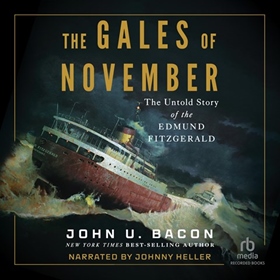
THE GALES OF NOVEMBER The Untold Story of the Edmund Fitzgerald
by John U. Bacon | Read by Johnny Heller
Recorded Books | Unabridged
HistoryBacon's book is significantly longer than Gordon Lightfoot's renowned song, so listeners will learn a lot more about the tragic sinking of the Edmund Fitzgerald in 1975. Johnny Heller presents fascinating details that include the physics of Great Lakes waves, the growth of their shipping industry, other notable wrecks, the commissioning and building of the Edmund Fitzgerald,... Read More
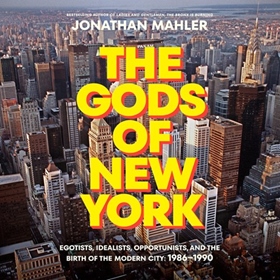
THE GODS OF NEW YORK Egotists, Idealists, Opportunists, and the Birth of the Modern City: 1986-1990
by Jonathan Mahler | Read by Robert Petkoff
Random House Audio | Unabridged
HistoryThe four years thoroughly chronicled by Jonathan Mahler show the growing divisions in a changing New York City in the late 1980s--and suggest parallels to today. In a rich, steady tone, Golden Voice narrator Robert Petkoff conveys the rising rates of crime and poverty, and the widening racial divide, along with the opposing ways the city's leaders reacted to them. The audiobook... Read More
THE GREATEST SENTENCE EVER WRITTEN
by Walter Isaacson | Read by Walter Isaacson, Holter Graham
Simon & Schuster Audio | Unabridged
HistoryHistorian and biographer Walter Isaacson takes on the additional role of narrator for this detailed analysis of one key sentence in the Declaration of Independence. From a contemporary perspective, the assertion that all humans are created equal rings hollow since we know all 13 thirteen colonies sanctioned slavery. Most interesting here is Isaacson's close examination of the... Read More
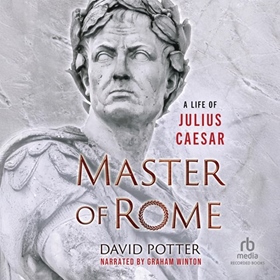
MASTER OF ROME A Life of Julius Caesar
by David Potter | Read by Graham Winton
Recorded Books | Unabridged
HistoryDavid Potter has written a straight-ahead biography of Julius Caesar with a coda about his posthumous influence, and Graham Winton gives a correspondingly straight-ahead performance of both. His voice is pleasantly serviceable, and he generally conveys meaning accurately in his tone, emphasis, and phrasing. Overall, he delivers the sense of the text in a way that's congenial... Read More
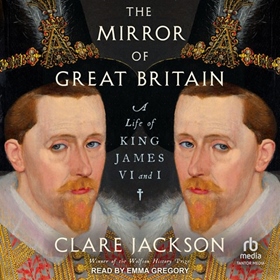
THE MIRROR OF GREAT BRITAIN A Life of King James VI and I
by Clare Jackson | Read by Emma Gregory
Tantor Media | Unabridged
HistoryBrisk, fluent, pleasing to the ear, Emma Gregory's narration does justice to a fine historian and her landmark biography of one of Britain's most misunderstood rulers. On the death of Elizabeth I in 1603, Scotland's James VI became England's James I, first in the Stuart line. James was one of Britain's most intelligent and energetic rulers, and one the most complex. Today he is... Read More
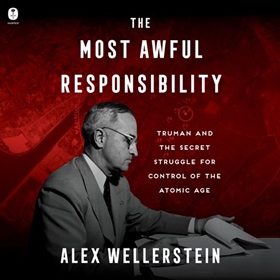
THE MOST AWFUL RESPONSIBILITY Truman and the Secret Struggle for Control of the Atomic Age
by Alex Wellerstein | Read by Tim Campbell
Harper Audio | Unabridged
HistoryTim Campbell's sonorous voice is a splendid match for Wellerstein's account of the decision to drop the atomic bombs on Japan in 1945. Wellerstein, a scholar of the history of nuclear weapons and the creator of the website NUKEMAP, delves deep into American nuclear policy. His conclusion is that President Harry S. Truman was almost entirely out of the decision loop. After the... Read More
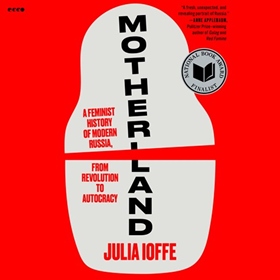
MOTHERLAND A Feminist History of Modern Russia, from Revolution to Autocracy
by Julia Ioffe | Read by Julia Ioffe
Harper Audio | Unabridged
HistoryThis powerful audiobook examines Russia from the points of view of its women. Author and narrator Julia Ioffe's in-depth research and personal connection to the material make this a particularly compelling listen. Featuring Russian people such as her own great-grandmother and others alongside revolutionary icons like Alexandra Kollontai and dissidents like Pussy Riot and Yulia... Read More
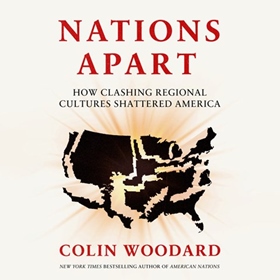
NATIONS APART How Clashing Regional Cultures Shattered America
by Colin Woodard | Read by Ari Fliakos
Penguin Audio | Unabridged
HistoryAri Fliakos' skillful narration reflects the tone of this audiobook: serious, intentional, and thought provoking. The national discourse about who best represents the current voting electorate typically oversimplies the geography, looking at it as "red states" and "blue states." But Woodard's research reveals a different kind of cultural history and understanding of what it... Read More
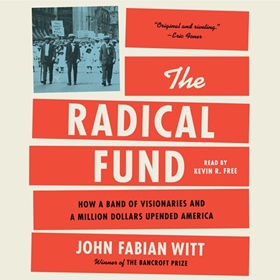
THE RADICAL FUND How a Band of Visionaries and a Million Dollars Upended America
by John Fabian Witt | Read by Kevin R. Free
Simon & Schuster Audio | Unabridged
HistoryKevin R. Free highlights the narrative throughline of this detailed history. Listeners may not be familiar with Charles Garland, but the fund he established in the early 1920s continues to have an impact on American society. When Garland determined that his substantial inheritance should be used to strengthen society through major social causes, the result was initiatives like... Read More
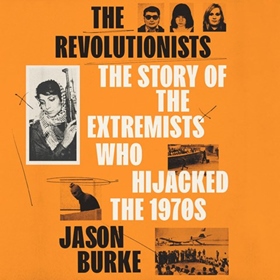
THE REVOLUTIONISTS The Story of the Extremists Who Hijacked the 1970s
by Jason Burke | Read by Kristin Atherton
Random House Audio | Unabridged
HistoryKristin Atherton is the absolute right choice to narrate this riveting and complex history of the rise of global terrorism. The research provided here is ambitious, providing a clear-eyed, deeply considered history of the nature of terrorist acts, the motivations for which were hard for news broadcasts of the 1970s to fully capture. Atherton's narration never wavers as Burke... Read More
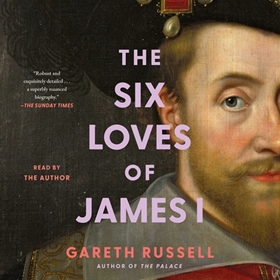
THE SIX LOVES OF JAMES I
by Gareth Russell | Read by Gareth Russell
Simon & Schuster Audio | Unabridged
HistoryBelfast-born Gareth Russell's rich accent adds ambiance to this engaging biography of Scotland's James VI and England's James I. Despite the suggestive title, Russell's well-researched narrative covers all aspects of James' life and his place among the Stuart rulers who preceded and followed him. James' private inclinations have been known for centuries, and a significant... Read More
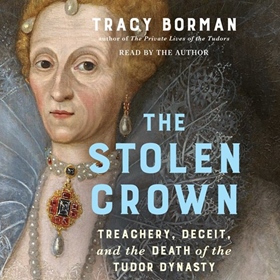
THE STOLEN CROWN
by Tracy Borman | Read by Tracy Borman
Simon & Schuster Audio | Unabridged
HistoryHistorian Tracy Borman's research and narration offer a riveting account of the battle for succession following the reign of Queen Elizabeth I. Borman narrates her careful investigation of the events leading to the end of the Tudor dynasty and the rise of the Stuarts. Borman sounds like a favorite professor. Her voice is well modulated, and her pace makes the history easy to... Read More
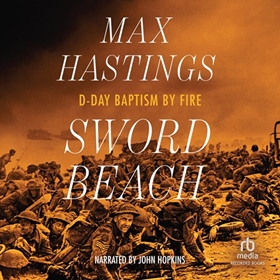
SWORD BEACH D-Day Baptism by Fire
by Max Hastings | Read by John Hopkins
Recorded Books | Unabridged
HistoryWorld War II buffs won't be disappointed as narrator John Hopkins capably delivers this account of the British landing on the easternmost beach of the Normandy Invasion in June 1944. Hastings, a well-known British military historian, switches from his usual mile-high view of events to a ground-level view. He gives splendid descriptions of the preparations for the landing, the... Read More
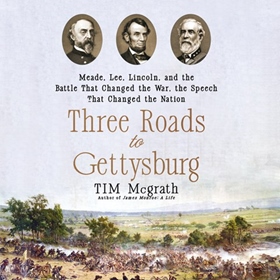
THREE ROADS TO GETTYSBURG Meade, Lee, Lincoln, and the Battle That Changed the War, the Speech That Changed the Nation
by Tim McGrath | Read by Vas Eli
Penguin Audio | Unabridged
HistoryThis epic audio history traces the lives of Abraham Lincoln, Robert E. Lee, and George Meade, culminating in their confrontation at the Battle of Gettysburg. While many listeners might be well acquainted with Lincoln and Lee, there is plenty of new detail about each. Meade is less well known and comes to life in this audiobook. Narrator Vas Eli does a solid job. He carries the... Read More
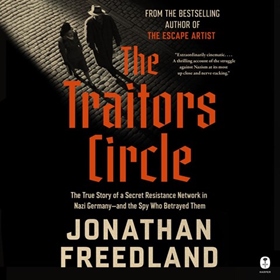
THE TRAITORS CIRCLE The True Story of a Secret Resistance Network in Nazi Germanyand the Spy Who Betrayed Them
by Jonathan Freedland | Read by Jonathan Freedland
Harper Audio | Unabridged
HistoryIn 1943 a select group from the upper echelons of German society gathered at a tea party. They hated what Germany had become under Hitler, and they resolved to stop him. Author and narrator Jonathan Freedland engages listeners in this little-known story of Nazi resistance. His narration is both articulate and steady. His voice drives the narrative with energy, infusing... Read More
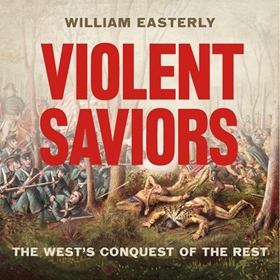
VIOLENT SAVIORS The West's Conquest of the Rest
by William Easterly | Read by Fred Sanders
Hachette Audio | Unabridged
HistoryEasterly's examination of the history, economics, and ethics of colonialism and the often demeaning "development" of the Third World is delivered by Fred Sanders. Generally, he narrates at a good pace with clarity, textual understanding, and an amiable manner. His slightly hoarse timbre is agreeable enough, but there's a certain woodenness to his diction, partly due to... Read More