

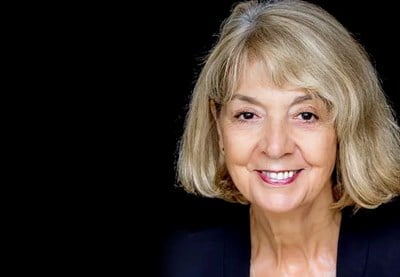
"It's exciting to decide what you're going to do with each book."


Recent audiobooks
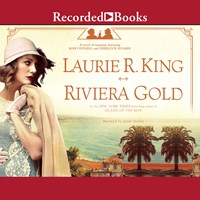
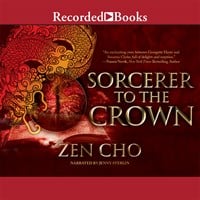
Jenny's Accolades
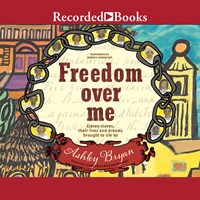
Freedom Over Me AudioFile Best of 2017 Children & Family Listening
Pirate King AudioFile Best of 2011 Mystery & Suspense
The Language of Bees AudioFile Best of 2009 Mystery & Suspense
Podcasts
Talking with Jenny Sterlin
Jenny Sterlin began her professional career as a member of an English weekly repertory company that staged a different three-act play every seven days. The first time she trod the boards she played an 8-year-old boy. The following week, she was a 67-year-old murderess. "It was an extraordinary training ground, and perfect for an audiobook narrator. Although at the time--over 35 years ago!--I had no idea I'd become one."
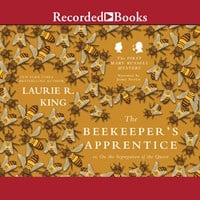
Before she became an Earphones Award-winning reader, Sterlin helped found England's experimental Living Theater, raised a family, moved to the States, and earned a degree in psychology and English literature. Throughout, she worked steadily as a stage and screen actress. It was during rehearsal for a New York play that someone introduced her to audiobooks. She taped Laurie King's THE BEEKEEPER'S APPRENTICE for Recorded Books and hasn't stopped since. (King is one of Sterlin's favorite mystery authors, and the two recently had a delightful visit over a cup of coffee after a book signing.)
"You have such freedom as a narrator. It's exciting to decide what you're going to do with each book." She begins by reading the manuscript and jotting down "vast notes" about characters' backgrounds, attitudes, and professions. "Sometimes I get caught up in the story and forget to make notes. That's a huge problem--I love to read!--because then I have to go through a second time."
As she records, Sterlin visualizes the characters. Even when an author doesn't describe someone, Sterlin invents a look. "Are they fat, thin, tall, short? It makes a difference in terms of how I hold my voice, and it helps keep my portrayal of the character consistent."
She delights in recording everything from children's books, for which she refuses to "dumb down" her delivery--"I can't bear to patronize kids"--to Thomas Hardy. "Even though he's a classic, he's not easy, as you've got make quite enormous passages interesting to the ear." She's also recorded loads of mysteries, which she loves to listen to as well as narrate. (She borrows them from Recorded Books "hot off the press.")
Jenny Sterlin, the narrator and reader, is also a writer. She just finished her first book, THOMAS'S JOURNEY, a children's novel about two mice who fall in love and go on a long trip. She's recorded the first two chapters and is pondering whether to desktop-publish the book and CD as a package. Whatever happens, she promises she won't stop narrating other writers' work. "I love it too much to stop. How else could I be man, woman, old, and young in the space of one production?"--Aurelia C. Scott (October/November 2009)
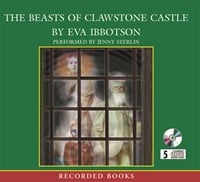
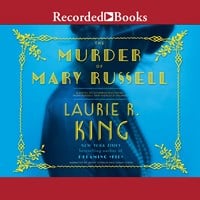
British-born actress Jenny Sterlin has more than 70 audio titles to her credit, including Laurie R. King's popular Sherlock Holmes/Mary Russell series. In drama school, Jenny was the dresser for visiting actor Jeremy Brett. When she was tapped to do the King series, she modeled Holmes after him: "He is the definitive Sherlock Holmes." She also enjoys recording Deborah Crombie's Duncan Kincaid/Gemma James series. In addition to adult fiction, Jenny is a much-sought-after narrator of children's books. She gets her second Earphones Award for Eva Ibbotson's THE BEASTS OF CLAWSTONE CASTLE . A mother of three and grandmother of four, Jenny notes that when narrating children's books, "it's so important not to become patronizing or play down to the audience." Preserving what the author wants to create is "a great responsibility. The reader guides the listener's imagination." Some of her favorite narrators include Derek Jacobi, Simon Jones, Judith Ivey, and Simon Prebble. Jenny recently concluded a four-month stint on Broadway in "Heartbreak House," and in August, she returns to England to do Tom Stoppard's "Arcadia." She just finished recording Maeve Binchy's WHITETHORN WOODS and Virginia Henley's INFAMOUS and soon begins work on Julia Quinn's THE SECRET DIARIES OF MISS MIRANDA CHEEVER.
Photo courtesy of the narrator