

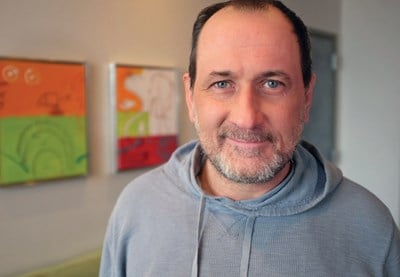
Scott Sowers had extraordinary range and an uncanny knack for sounding conversational and fresh.


Recent audiobooks
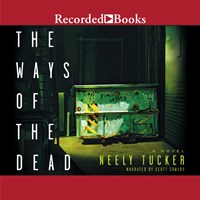

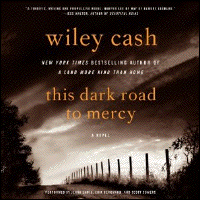
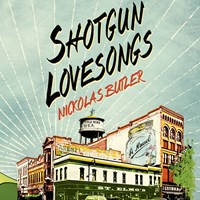

Accolades for Scott Sowers
Down River AudioFile Best of 2008 Mystery & Suspense
Kill Zone AudioFile Best of 2008 Mystery & Suspense
Quiver AudioFile Best of 2008 Mystery & Suspense
Remembering Scott Sowers
After the one-two punch of losing dear friends Katy Kellgren and Jan Maxwell, news of Scott Sowers’s passing really put me back on my heels. We lost Scott on Easter, which happened to fall on April Fools’ Day this year. Sadly, it was not a joke in poor taste . . . he really is gone.
As a student at Washington Lee High School in Arlington, Virginia, Scott and his friend and acting partner Sandra Bullock were a dynamic duo in plays and talent shows. Scott was a naturally gifted actor who made it all look and sound so easy. It was, for him. After studying at The University of North Carolina School of the Arts, he moved to New York City. In 1991, Scott cofounded Signature Theatre Company with James Houghton and Romulus Linney. In 1992, he won the Drama-Logue Award for his role as the colonel in A FEW GOOD MEN at the Shubert Theater. He had other dramatic turns on Broadway in A STREETCAR NAMED DESIRE, BUS STOP, and INHERIT THE WIND. He also starred in countless wonderful shows at Ensemble Studio Theatre in New York City.
The camera loved him as he effortlessly played an assortment of characters on TV and in films, including “Law & Order” bad guys, an unlikely Klansman on “Boardwalk Empire,” and in a scene-stealing opening monologue as an unrepentant condemned man in the Coen brothers classic Western remake, TRUE GRIT. Scott was also featured in the Academy Award-winning short “My Mother Dreams.”
I love all of Scott’s work, but I was particularly moved by his audiobook narration. He recorded hundreds of audiobooks. From John Grisham to Hunter S. Thompson, Scott Sowers had an extraordinary range and an uncanny knack for sounding conversational and fresh. He was reading just for you, a good friend telling you a story.
We used to happily schedule his recordings around his weekly work in a local soup kitchen. A lover of animals, dogs in particular, Scott spent the last few years working at a Salt Lake City kennel, socializing and finding homes for dogs and cats. Scott Sowers was a sweet and generous soul who always saw the best in people and never stopped believing in the innate goodness in everyone. I sure loved him, and audiobook listeners will be able to love him for generations to come, through his legacy of masterful storytelling.--Scott Sherratt
June/July 2018
©AudioFile 2018, Portland, Maine
Scott's Accolades
Down River AudioFile Best of 2008 Mystery & Suspense
Kill Zone AudioFile Best of 2008 Mystery & Suspense
Quiver AudioFile Best of 2008 Mystery & Suspense
Photo by Scott Sherratt